Solitaire Y
HeartsNetCard
4.421.00 Reviews
- Version
- 1.6.6
- Installs
- 50.00K
- Age Rating
- Everyone
Screenshots
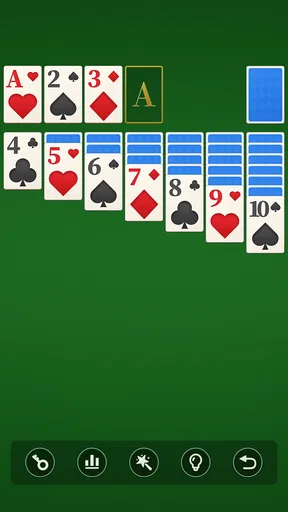
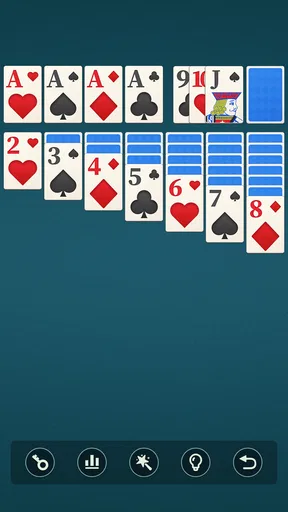
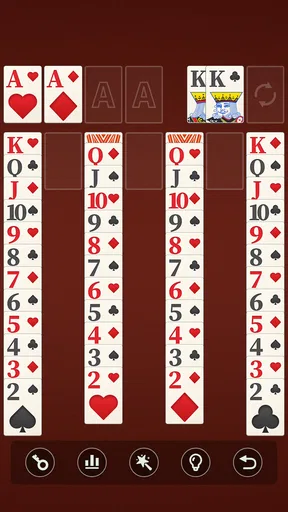
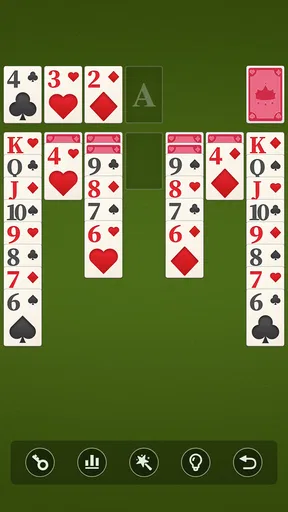
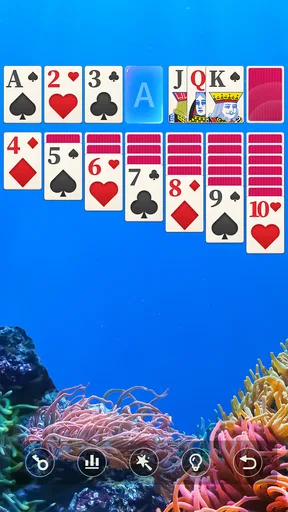
Our Review of Solitaire Y
 Analysis by Appyee
I downloaded Solitaire Y expecting a straightforward card game, and that is exactly what I found: a free solitaire title from HeartsNet that is easy to open, easy to understand, and comfortable to play in short sessions. It belongs to the classic card-game category, carries an Everyone age rating, and works on Android devices running version 7.0 or later. My first impression was not that it was trying to reinvent solitaire, but that it wanted to remove the effort between having a spare minute and making the first move.
That simplicity is both its strongest quality and the main question surrounding it. A familiar card game can become a dependable daily habit, but it can also lose its appeal once the initial convenience wears off. I spent time looking at Solitaire Y from that angle: not only whether it is pleasant during the first few plays, but whether it deserves a permanent place on a phone that already has plenty of distractions.
What the first week feels like
The opening experience is naturally gentle. Solitaire does not ask me to learn a complicated ruleset, build a collection, or understand a large menu before playing. If I already know the basic rhythm of arranging cards, I can begin almost immediately. If I am less familiar with the format, the traditional structure is still approachable because each move has a visible purpose: uncover cards, organize suits, and gradually clear the layout.
That makes the game particularly suitable for small gaps in the day. I can imagine opening it while waiting for an appointment, taking a quiet break from work, or winding down before sleep. It does not demand the same attention as a competitive multiplayer game, and it does not punish me for leaving after a short session. The best part of Solitaire Y is its low commitment: I can play when I want a little concentration without turning the activity into an event.
The store presents it as “Solitaire Y,” while the experience itself is rooted in the classic solitaire idea. That distinction matters because players searching for a large collection of card modes should keep their expectations measured. This is most appealing when I want the familiar solitaire loop rather than a broad card-game package with many unrelated systems.
During the first week, familiarity works in its favor. I do not need to spend time discovering an elaborate progression path. The pleasure comes from making a sequence of sensible decisions, spotting a useful opening, and watching the layout become more manageable. Even an ordinary hand can provide a small feeling of order, which is why this kind of game remains useful for people who prefer quiet entertainment to constant stimulation.
Who gets the most from the simple format
I would recommend it first to someone who wants a traditional solitaire game that can be picked up without preparation. It also suits players who dislike games built around social pressure, rapid reactions, or complicated objectives. The Everyone rating makes it a reasonable choice for a broad household audience, although the real deciding factor is taste: people who enjoy arranging cards and thinking through possibilities will understand the appeal quickly.
It is less convincing for anyone looking for a deep card-game hobby. If your ideal mobile game includes tournaments, opponents, a long campaign, extensive customization, or a steadily expanding collection of modes, Solitaire Y may feel too narrow. Its first-week appeal comes from restraint, not variety.
One practical way I found to use it is as a transition activity. Instead of opening a social feed during a five-minute pause, I can play a few moves and stop at a natural point. That gives the break a beginning and an end. The game does not need to become a major pastime to be useful; it can simply replace a more draining habit with something calmer and more focused.
Small decisions matter more than speed
Solitaire is often described as relaxing, but the relaxation depends on how I play. Rushing every move can turn a quiet session into a frustrating search for mistakes. I get more from Solitaire Y when I slow down and treat each card as a choice rather than tapping automatically. Before moving an available card, I look at what it reveals and whether the move opens more options than it closes.
That habit is especially valuable on a phone, where a small screen can encourage hurried taps. I recommend pausing after uncovering a new card and scanning the whole layout again. The most attractive move is not always the best one; sometimes preserving a sequence or exposing a hidden card matters more than immediately building a visible stack. This is a simple tip, but it changes the game from passive time-filling into a compact exercise in planning.
Another useful routine is to decide in advance how long I want to play. A short session works well when I am tired, while a longer one is more satisfying when I want sustained concentration. Without that boundary, a familiar card game can become background activity that fills time without feeling particularly memorable.
Does it keep earning space after the novelty fades?
The month-to-month value of Solitaire Y depends almost entirely on whether the core solitaire loop fits into my routine. There is no need for a new theme or a dramatic objective to make a session worthwhile, but repetition eventually exposes the limits of any focused card game. After the first few weeks, the question changes from “Is this pleasant?” to “Do I still have a reason to open it instead of choosing another game?”
For me, the answer is yes when I want a predictable, low-pressure activity. Familiarity becomes an advantage because I can play without mentally preparing. I know what kind of attention it needs, and I can stop without feeling that I have abandoned a larger task. That recurring value is modest but real. Solitaire Y works best as a dependable utility for leisure rather than as a game that constantly rewards discovery.
Its free price also lowers the commitment involved in trying it. I do not need to justify a purchase before finding out whether the format suits me. The current version is 1.6.6, and the game has reached over 50 thousand installs, which suggests that the straightforward approach has found an audience. Its average rating is 4.4 from more than two hundred ratings, a positive reception that matches my general impression: the game is easy to appreciate when its limited scope is exactly what I want.
Those figures should not be read as proof that it will satisfy every card player. A rating cannot tell me whether the presentation, pacing, or available depth matches my personal preferences. What it does suggest is that Solitaire Y is not an obscure experiment with no practical audience. It has enough visibility to be considered as a simple everyday option, especially for someone who values accessibility over novelty.
How I would fit it into a regular routine
I would use Solitaire Y in three different ways. First, I would keep it for short waiting periods, where a full action game would be inconvenient and a puzzle with a long setup would be excessive. Second, I would use it as a screen break from faster entertainment, because the card layout asks me to focus on one small problem at a time. Third, I would reserve it for evenings when I want something interactive but not emotionally demanding.
That last use case is important. Some games leave me alert and competitive just when I want to relax. A classic card layout can provide enough structure to hold my attention without creating the same pressure. The trade-off is that the experience may feel too quiet for players who need constant goals, visual rewards, or a strong sense of progression.
For a commuter or someone with an unpredictable schedule, the game’s biggest practical strength is that a session does not need to be planned. I can play for a few moves, put the phone away, and return later when the opportunity appears. The habit is sustainable precisely because it does not ask for a daily commitment. On the other hand, players who prefer games that remember and celebrate long-term accomplishments may find this kind of repeatable session less motivating.
Where it stands beside other card-game choices
Compared with a physical deck, Solitaire Y is more convenient because I do not need a table, a clean surface, or time to shuffle and arrange cards. It is also easier to carry into a waiting room or use during a brief pause. The physical alternative still has a tactile quality that a phone cannot reproduce, and some people will prefer the slower ritual of handling real cards.
Compared with multiplayer card games, Solitaire Y is more private and forgiving. I do not need another person online, and my enjoyment is not tied to an opponent’s skill or schedule. That makes it a better fit for quiet solo play. The cost is that there is no social tension or shared excitement driving me back.
Compared with larger solitaire collections, its focused identity can be either refreshing or restrictive. A collection is the better choice if I want to switch between several rule sets when one mode becomes repetitive. Solitaire Y is the better choice when I want one familiar format without navigating a crowded catalogue. In my view, choosing between them is less about quality than about whether variety or simplicity matters more to me.
The maintenance burden is pleasantly low
A game like this earns long-term space partly by staying out of the way. Solitaire Y does not require me to maintain a character, manage resources, follow a story, or keep up with a competitive schedule. That reduces the mental overhead of returning after a break. I can ignore it for days and come back without needing to remember a complex objective.
That low maintenance is a genuine advantage for casual players. I do not have to treat the game like another responsibility. It can sit on my device until I need it, then provide a complete activity without preparation. For someone trying to reduce the number of demanding apps on a phone, this simplicity has more value than it might initially appear to have.
There is also a maintenance trade-off. A game with a narrow purpose has fewer ways to refresh itself in my mind. If the basic layout stops feeling interesting, there may be no larger system to pull me back. The same absence of complexity that makes the first session comfortable can make the tenth month feel familiar in a less flattering way.
I would therefore avoid judging its staying power by daily frequency alone. Solitaire Y does not need to be opened every day to justify its place. If it becomes my reliable option for occasional quiet moments, that is a successful outcome. Trying to force a daily streak would probably turn a relaxing game into a chore and expose its repetitive side more quickly.
What creates fatigue over time
The main source of fatigue is not difficulty; it is sameness. The core activity remains recognizable from one session to the next, and that is part of its charm. Yet once I have played enough, I may begin to notice that I am repeating the same mental pattern without much surprise. Players who need fresh content to maintain interest should be especially cautious here.
Another possible friction point is the mismatch between expectation and scope. The phrase “classic card game” sets a clear direction, but some users may still install it hoping for a broad selection of solitaire variants or a more elaborate reward structure. If that is what you want, this focused experience may feel under-equipped. I would choose it with the understanding that its purpose is dependable play, not endless expansion.
There is also a subtle fatigue caused by playing without a personal goal. When I begin a session simply because the icon is available, the game can become automatic. I get better results when I give the session a small purpose: complete one layout carefully, practice looking ahead, or use the game to replace a few minutes of aimless scrolling. That framing keeps the activity intentional.
My advice is to rotate it with other kinds of entertainment rather than demanding that it carry all of my gaming time. Used alongside a puzzle, a story-driven game, or a physical deck, Solitaire Y remains a useful change of pace. Used as the only game on the phone, its limited variety is more likely to become noticeable.
Who should install it, and who should skip it
I think Solitaire Y is a good installation for a player who wants free, solo card entertainment with a familiar learning curve and little maintenance. It is especially suitable for short sessions, relaxed evenings, and anyone who prefers making careful decisions over reacting quickly. The broad age rating also makes it easy to consider for a mixed household, provided everyone enjoys this type of traditional play.
I would skip it if I need opponents, social interaction, a campaign, or a strong progression system. I would also look elsewhere if I become bored quickly with repeated layouts and need several card modes to stay engaged. In those cases, a broader card collection or a multiplayer-focused alternative would probably provide better long-term value, even if it required more time and attention.
For older Android devices, the minimum requirement of version 7.0 or later keeps the compatibility threshold relatively approachable. Still, compatibility alone does not guarantee that every person will enjoy the design. The important question is whether a focused solitaire experience sounds like a benefit or a limitation to you.
My long-term verdict
After the novelty fades, Solitaire Y earns its place through reliability rather than surprise. HeartsNet has made a free card game that is easy to understand, gentle enough for casual use, and practical when I want a few quiet minutes. Its 4.4 average and growing install base fit that impression, but my recommendation rests more on how naturally it fits into everyday pauses than on its store presence.
I would keep it installed for the same reason I keep other dependable tools: I may not use it constantly, but when I want this exact kind of activity, it is ready. The game is not the right choice for players seeking a deep or constantly changing card experience, and its focused format can become repetitive if I expect months of novelty. That limitation should be part of the decision, not a surprise after installation.
My final view is simple: Solitaire Y is worth keeping when calm, familiar solo play matters more than variety. I recommend trying it for short sessions, resisting the temptation to turn it into a forced habit, and judging it after the first few weeks by whether it gives you a useful alternative to scrolling or more demanding games. If it continues to fill that role, its modest design becomes a strength. If you need constant discovery, it is better treated as a temporary download than a permanent companion.
Verdict
Strengths of Solitaire Y
- Simple rules make it easy for beginners to start playing.
- Short rounds are convenient for quick breaks or casual play.
- Offline access lets you play without a constant internet connection.
- Smooth card controls make moving and arranging cards feel natural.
- A relaxing pace suits players looking for a low-pressure game.
Limitations of Solitaire Y
- Limited gameplay variety may become repetitive after extended sessions.
- Some features may be restricted unless you watch ads or pay.
- Small cards can be harder to read on compact phone screens.
- Progression may feel shallow for players seeking deeper challenges.
- Ad interruptions can reduce the enjoyment during longer play sessions.
Other Releases by HeartsNet
View All

Similar Picks in This Category
View All
Solitaire - Classic Card Games
MobilityWare4.6

UNO!™
Mattel163 Limited4.3

Spider Solitaire: Card Games
MobilityWare4.6

Solitaire.com - Classic Cards
Tripledot Studios Limited4.7

Plants vs. Zombies™ Heroes
ELECTRONIC ARTS4.1

Hearthstone
Blizzard Entertainment, Inc.4.1
Frequently Asked Questions
What is Solitaire Y, and how is the game played?
Solitaire Y is a digital solitaire card game designed for players who enjoy classic, relaxing card puzzles on a mobile device. The main objective is to arrange cards according to the selected solitaire rules, usually by building sequences and moving cards strategically between piles. Its simple controls make it accessible to beginners, while thoughtful moves and planning provide a challenge for experienced players.
Is Solitaire Y free to download and play?
Solitaire Y can generally be downloaded and played without an upfront purchase, although the exact business model may depend on the Android or iOS version available in your region. Free versions of solitaire games commonly include advertising, optional purchases, or additional features that may require payment. Before downloading, check the store listing for current pricing, ads, and in-app purchase details.
Does Solitaire Y require an internet connection?
Solitaire Y may support offline play, which is useful when traveling, commuting, or playing in areas with limited connectivity. However, some features—such as advertisements, statistics synchronization, online events, cloud saves, or updates—may require internet access. After installation, it is worth testing the game in airplane mode to confirm which functions remain available without a connection.
Is Solitaire Y suitable for beginners and casual players?
Yes, Solitaire Y is generally suitable for beginners because solitaire gameplay is easy to understand and the controls are usually based on tapping or dragging cards. New players can learn the basic rules through practice, while hints or undo options may make difficult rounds less frustrating. Players who prefer a slower, relaxing experience should find the format approachable and convenient.
What should I know about privacy, permissions, and in-app advertising?
Before installing Solitaire Y, review its app-store privacy section and requested permissions. A standard card game should not need access to unrelated features such as contacts or messages, although advertising and analytics services may request network access or collect usage information. If the game includes ads or optional purchases, check the privacy policy and device purchase settings, particularly when children use the app.
Play our best games!


